
Dog clothes: waterproofs and coats


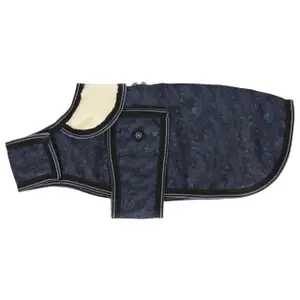


The Dog Clothing page brings together lined coats, waterproof jackets, jumpers, fleece jackets, and reflective vests, as well as socks, bandanas, and protective pants. Useful pieces for short-haired breeds, small sizes, and older dogs, to keep their coat dry and their body warm during winter walks or in the rain.
Keep your dog warm and dry, whether out and about or at the stables.
Short-haired, small size, older dogs: who needs to be covered
A dog regulates its temperature thanks to its coat, and not all are equal when it comes to the cold. Breeds with short hair and no undercoat, like greyhounds, whippets, chihuahuas, or miniature pinschers, have little natural insulation. Small dogs, close to the ground, tend to get their bellies wet in the slightest puddle and lose heat quickly. Older dogs, sick or shaved, also struggle to regulate their temperature. In contrast, a husky, German shepherd, or Bernese mountain dog, with thick undercoats, usually don’t need anything and might even get too warm. Signs of discomfort are easy to spot: shivering, hunching, lifted paws, refusing to move.
The dog world on the site
The dog world also includes:
Everything is gathered on the dog page.
Coat, raincoat, fleece or jumper: which piece
The coat, often padded, insulates from dry cold and protects the back and flanks during long winter walks. The raincoat, lightweight and unlined, keeps the coat dry in the rain: this helps avoid a long drying time on return and the smell of a wet dog. The fleece and knitted jumper are suitable for small, chilly dogs, in a poorly heated home or for a short outing, and can sometimes be worn under a raincoat. Reflective strips and edges make the animal visible to cars as soon as night falls. For dogs that roll around, a model that covers the belly reduces mud on the chest.
Back length, chest girth and neck girth
The key measurement is the back length, taken from the withers, at the base of the neck, to the base of the tail, with the dog standing. Next, measure the chest girth, at the widest part, just behind the front legs, then the neck girth, at the base of the head. If you are between two sizes, go with the one that fits the chest girth, as it is the hardest to adjust. A well-fitting garment allows for a finger's width under the straps, doesn't rub under the armpits, and leaves the rear free for the dog to relieve itself without getting dirty. Velcro closures under the belly are easier to put on than models that go over the head.
Good deals
Great deals can also be found in good deals, promotions, clearance, sales, and Black Friday. The new arrivals feature the latest collections, and items shipped in 24h are prepared and sent within 24 hours. The key events of the year follow a stable order: Black Friday in late autumn, year-end holidays, winter sales, French Days in spring, followed by summer sales and back-to-school.
Frequently asked questions
At what temperature should you cover your dog?
For a small dog or a short-haired dog, a coat becomes useful below around seven to ten degrees, especially in damp or windy weather. A large dog with a dense undercoat can handle negative temperatures without any problems.
Should a dog keep its coat on at home?
No, except for very old or sick dogs in a cool room: indoors, it may get too warm and can't cool down. The coat should be removed as soon as you return from a walk, and the coat should be dried if it’s wet.
What are dog socks for?
They protect the pads from salt used for snow clearance, from snow that forms balls between the toes, and from burning surfaces. Non-slip models also help an older dog stay standing on a slippery floor or tiles.
When to use a protective pant?
The protective pant is worn during a female dog's heat to protect sofas and carpets or for an older dog prone to urinary leaks. It should be used with an absorbent towel and does not replace the need for supervision during walks.
How to wash a dog coat?
A machine wash at thirty degrees is sufficient for most models, with Velcro fastened so they don’t damage other laundry. A mild, unscented detergent is kind to the dog’s nose, and then the garment should be dried flat.






