
Rider bombs and helmets

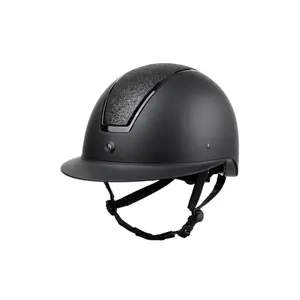


The Bombes page brings together riding hats for work and competition, from Samshield, Harry's Horse, Horze, Horka, Equipage, Casco, Equestro, Tattini, USG, HKM or Premier Equine.
The only equipment that protects your head: it should be chosen carefully.
Safety Standards
An equestrian helmet must meet a safety standard, which tests its shock resistance, penetration and the strength of its harness. In Europe, the most common standards are EN 1384 and VG1; competition regulations specify the accepted standards and require the harness to be fastened as soon as the rider is on the horse. A helmet can be identified by the standard label sewn inside.
MIPS, Ventilation and Finishes
The MIPS system, like on the Equipage Mips Guardian, adds a low-friction layer inside the helmet, which slides a few millimetres during an oblique impact to reduce the rotational forces transmitted to the brain. Ventilated helmets, like the Samshield Shadowmatt or the Harry's Horse Mont Blanc, dissipate heat through vents, and their removable inner foam is washable. The finishes, whether matte, glossy, velvet, or crystal, do not affect the protection.
Size and Replacement
You measure your head circumference with a measuring tape, just above the eyebrows, and try on the helmet: it should stay in place without moving when you shake your head, harness detached, without any pressure points. A helmet should be replaced after any fall with a head impact or any violent shock, even without visible damage, as the shell and foam may have absorbed the energy. Manufacturers also advise changing it after a few years, as materials degrade over time. A cover, like the polygiene cover from Horka, protects it from impacts and scratches during transport.
The Rest of the Outfit
The rider's outfit is completed with t-shirts and polos, jumpers and sweatshirts, jackets and coats, competition outfits, trousers, underwear, all gathered on the rider page.
New Arrivals and Good Deals
The new arrivals showcase the latest collections, the promotions feature discounted items, and the clearance and sales are for end-of-line products. Items shipped within 24h are prepared and dispatched within 24 hours.
Frequently Asked Questions
What standards must an equestrian helmet meet?
In Europe, the EN 1384 and VG1 standards are the most common. They test the shock resistance, penetration, and the strength of the harness. Competition regulations specify the accepted standards.
What does the MIPS technology bring to a helmet?
MIPS is an inner layer that slides slightly relative to the shell during an oblique impact. It reduces the rotational movements transmitted to the brain, which are common in falls from horses, in addition to shock absorption.
How do you measure your head circumference for a helmet?
Using a measuring tape, measure a finger above the eyebrows and just above the ears, at the widest point. A well-fitted helmet does not move when you shake your head, harness detached, without creating any pressure points.
When should you replace your riding helmet?
After any fall with a head impact, even without visible damage, as the inner foam may have compressed. Outside of falls, manufacturers recommend changing it after a few years, as the foam and harness degrade over time.
Large visor or classic visor: which helmet to choose?
The large visor offers better protection from the sun and rain, which is appreciated outdoors and on rides. The classic visor, which is shorter, opens up the field of vision upwards, which many show jumpers prefer.






