
Birkenstock during Black Friday


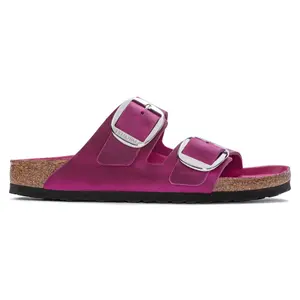


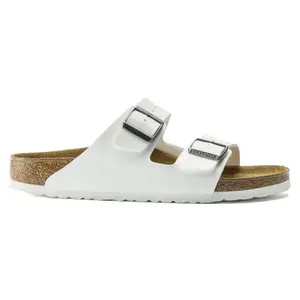
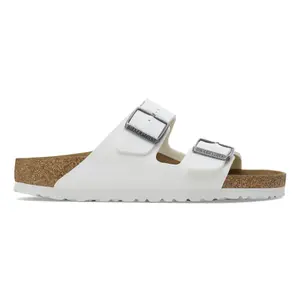


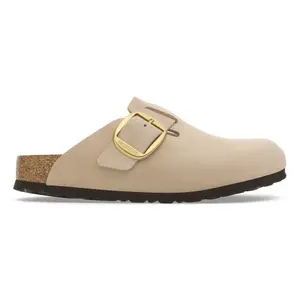


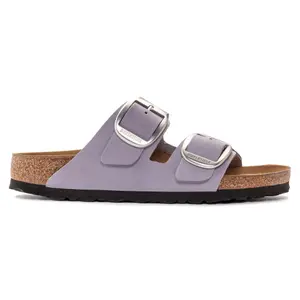

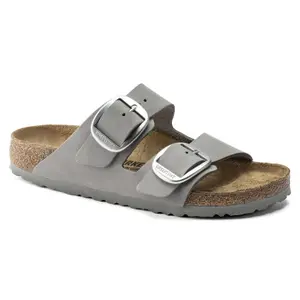


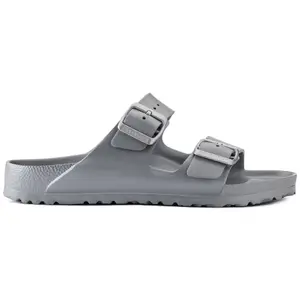


The selection Birkenstock for Black Friday highlights the German brand known for its anatomical footbed: Arizona two-strap sandals, Madrid single-strap, Gizeh toe-post and Mayari with crossed straps, closed Boston clogs for autumn and winter, made from leather, suede or Birko-Flor. These are models that can be worn for years and make for lasting gifts, just a few weeks before the holidays.
The comfort of the footbed, at a reduced price before the holidays.
From the cobbler of Hesse to the anatomical footbed
The story of Birkenstock begins in 1774, when Johann Adam Birkenstock is registered as a cobbler in the parish records of Langen-Bergheim, Hesse. More than a century later, starting in 1896, his descendant Konrad Birkenstock produces flexible orthopaedic insoles that shape to the foot, in contrast to the flat insoles of the time. This principle gives rise to the Footbed, trademarked in 1925. In 1963, Karl Birkenstock launches the brand’s first sandal, a single-strap gym sandal, renamed Madrid in 1979: the footbed leaves the shoe to become the shoe itself.
Other top brands
The Black Friday of top brands also includes:
All the top brands are gathered on the top brands page.
Arizona, Madrid, Gizeh, Boston: which model to choose
Each model serves a purpose. The Arizona, introduced in 1973, holds the foot with two wide adjustable straps: it is the most versatile and stable for long walks. The Madrid, with a single strap, is easy to put on and take off in one motion, perfect at home or by the water. The Gizeh, with its thong design, offers a flip-flop look while maintaining the support of the footbed. The Boston, a closed-toe clog born in 1976, can be worn with socks as temperatures drop; made from suede, it develops a patina over time. The Mayari, with its cross-strap that wraps around the big toe, completes the range for a finer fit.
Cork, latex, and Birko-Flor: the materials
The footbed combines natural cork and latex, topped with a suede insole that absorbs moisture. The cork compresses slightly under heat and body weight: after a few weeks, the insole retains the imprint of its owner. The straps come in smooth leather, suede, and Birko-Flor, a synthetic material that is soft to the touch, lighter than leather, and easy to clean with a sponge; the Birkibuc finish mimics the look of nubuck. The oiled leather develops a patina and softens over the years. To prolong the life of the pair, nourish the exposed cork with a sealing product when it loses its shiny appearance, and avoid leaving the sandals wet in the sun or near a radiator.
Sizing and width: the double fit
Birkenstock offers most of its models in two widths. The symbol printed on the footbed helps to identify them: a foot drawn in outline indicates a normal fit, a filled-in foot indicates a narrow fit, suitable for slim feet. The sizes follow European numbering: the heel should rest in the designated arch, with a few millimetres of space in front of the toes and on the sides, without the foot overhanging. A new pair feels firm during the first few days, while the cork molds to the foot. For a gift, the safest option is to note the size and width indicated on a pair of Birkenstock that the person already wears.
Frequently asked questions
Which country does Birkenstock come from?
Birkenstock is a German brand, stemming from a family of cobblers in Hesse whose history dates back to 1774. The majority of its production remains in Germany, where its main factories are located.
How do I know which size of Birkenstock to choose?
The models follow European sizing, but the fit is judged by the length of the foot rather than the size worn in another brand. The size guide on the product page, compared to the measured foot length in centimetres, avoids most errors.
Can you wear Birkenstock in the rain?
Cork and leather do not like water: a wet sandal dries slowly, in the open air and away from a heat source. For the beach or pool, the brand offers models in EVA, a light and waterproof foam.
How long does it take to break in Birkenstock?
It takes a few days to a few weeks of regular wear for the cork to conform to the shape of the foot. You start with short outings, then gradually increase the duration as the arch adjusts to the support of the footbed.
Which Birkenstock to gift for Christmas?
The Boston clog is the perfect winter gift: it can be worn from autumn, at home or in town, with thick socks. For a gift to open while thinking of warmer days, the Arizona remains the easiest model to wear.






