
Bit / Bridle: choosing the mouthpiece


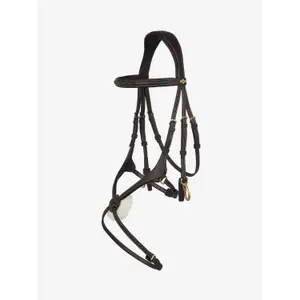


The Mouthpieces / Bridle page brings together bits, snaffles, bridles, reins, browbands, martingales, and breastplates from Stübben, Harry's Horse, Horze, QHP, BR Equitation, Waldhausen, LeMieux, Horka, Metalab, or Feeling.
The mouthpiece is the conversation between the rider's hand and the horse's mouth.
The major types of bits
The bit works on the corners of the lips and the tongue. The 2-ring bit, with sliding rings, allows for some play and suits most horses. The olive bit, with rings fixed to olive-shaped ends, is more stable and doesn’t pinch the corners. The baucher bit, with its upper branch, stays still in the mouth, which is reassuring for sensitive horses. The needle bit, with vertical branches, prevents the bit from slipping sideways and helps to guide young horses.
Types, thickness, and materials
A single break mouthpiece forms a V in the horse's mouth, while a double break, with a central piece, fits the palate better and distributes pressure on the tongue. A thick mouthpiece distributes pressure but must leave room in a small mouth. Synthetic materials with a taste of apple, like the Apple range from Harry's Horse, and copper, like the Stübben Sweet Copper, encourage salivation and a relaxed mouth. The bit is measured from one corner to the other, with a few millimetres of margin on each side.
Bridles, headstalls, and bitless options
The bridle bit, with branches and a curb chain, is combined with a bridle in the double bridle for high-level dressage. Anatomical headstalls, like the Waldhausen Island or the BR Equitation Thornbury, leave the base of the ears and the nape clear to relieve pressure points. The combined or Mexican noseband, like on the Stübben Freedom or Leitrim, stabilises the bit. Bitless headstalls, like the side pull from Harry's Horse, act on the nose and suit horses that refuse the bit.
Reins and accessories
The reins made of non-slip webbing or with stops, like those from BR Equitation or QHP Web, ensure a good grip in the rain. The ring martingale prevents the horse from raising its head too much, and the hunting breastplate stabilises the saddle and gives the rider a hold. The anti-fly browbands, with fringes, protect the eyes in summer. A horse's equipment is completed with covers, pads and shock absorbers, saddles and girths, halters and lunge lines, protection gear, on the horse page.
New arrivals and good deals
The new arrivals showcase the latest collections, the promotions feature discounted items, and the clearance and sales are for end-of-line products. The items shipped in 24h are prepared and sent out within 24 hours.
Frequently asked questions
How do you measure the size of a bit?
Measure the width of the horse's mouth from one corner to the other, using an existing bit or a piece of string. The bit should extend about half a centimetre on each side, without pinching or slipping too much.
Single break or double break bit?
The single break can have a nutcracker effect on the palate when the reins are pulled tight. The double break, with an olive or central plate, fits the tongue better and is suitable for sensitive horses.
Two-ring bit or olive bit: which one to choose?
The two-ring bit, with sliding rings, allows for some play and suits most horses. The olive bit, being more stable, does not pinch the corners and reassures horses with sensitive mouths.
Is a thick bit softer?
Not always: a thick bit distributes pressure, but it can be uncomfortable for a horse with a small mouth or a fleshy tongue. The right diameter depends on the horse’s mouth morphology.
What is a bitless bridle?
It’s a headpiece that acts on the nose, the nape, and sometimes the chin, without anything in the horse's mouth. It is suitable for horses that refuse the bit or for riders who prefer a gentler approach to riding.






